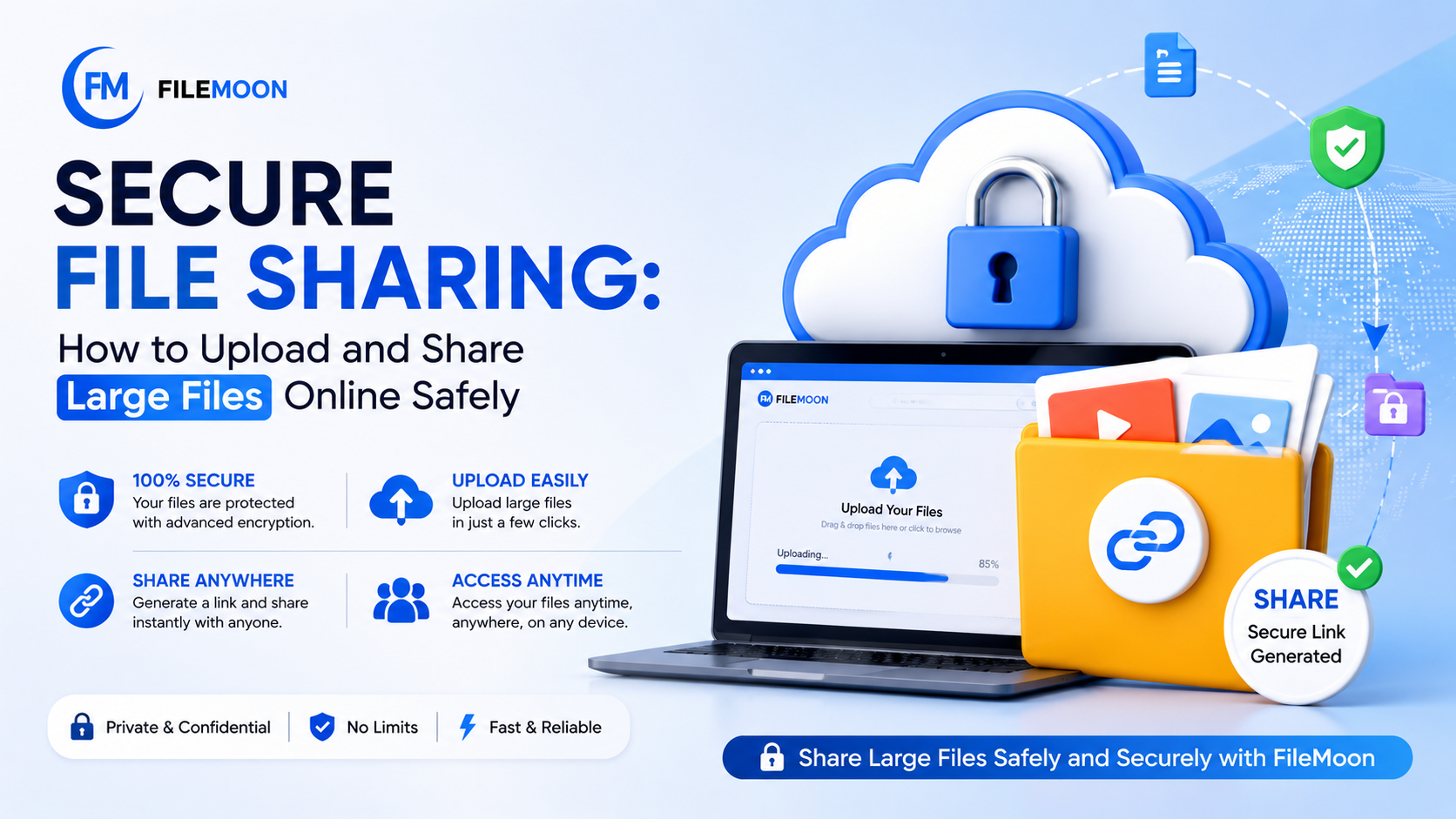
Sharing files online has become a normal part of daily work, study, business, and content creation. People now send videos, documents, images, project files, presentations, and backups through the internet every day. But as file sizes grow, traditional sharing methods like email attachments or messaging apps are no longer enough.
This is where secure file sharing becomes important. Users need a simple way to upload large files, store them safely, and share them with others through a direct link. A good file sharing system saves time, protects access, and makes online collaboration easier.
What Is Secure File Sharing?
Secure file sharing means uploading and sending files online in a way that protects privacy, improves access, and reduces risk. Instead of sending large files directly through email, users upload them to a file hosting service and share a link with the people who need access.
This method is useful because large files can be difficult to send manually. Many email providers have attachment limits, and messaging apps may compress files or reduce quality. With online file hosting, users can keep the original file available and share it more conveniently.
Why Secure File Sharing Matters
File sharing is not only about speed. It is also about safety, reliability, and control. When users upload files online, they want to make sure those files are accessible when needed and not exposed carelessly.
Businesses may need to share reports, product videos, client files, or training materials. Creators may need to send large videos, images, or media projects. Students may need to share assignments, documents, or research files. In all these cases, secure file sharing helps make the process easier and more organized.
Without a proper system, users may face problems like broken attachments, failed uploads, slow downloads, or privacy risks.
Common Problems With Traditional File Sharing
Traditional file sharing methods still work for small files, but they become limited when files are large. Email services often block big attachments. Social apps may reduce quality. Local storage can become full. Direct server uploads can slow down websites.
Some common problems include:
- File size limits
- Slow upload and download speed
- Poor mobile access
- Loss of original file quality
- Difficult file management
- Higher server load for website owners
- Privacy concerns with public sharing
Because of these issues, many users now prefer online file hosting platforms.
Benefits of Using an Online File Hosting Platform
An online file hosting platform gives users a central place to upload and manage files. Once a file is uploaded, it can be shared through a link. This makes the process faster and cleaner than sending the same file again and again.
For users who need a secure file sharing platform, FileMoon can be a useful option for uploading, hosting, and sharing files online through simple links.
The biggest benefit is convenience. Users can upload once and share the link wherever needed. This is especially helpful for large videos, documents, ZIP files, images, and other digital content.
Another benefit is accessibility. Files can be opened from different devices, including mobile phones, laptops, tablets, and desktop computers. This makes it easier for teams, clients, viewers, or friends to access shared content.
Secure File Sharing for Video and Media Files
Video files are often much larger than normal documents or images. Sending them through email is difficult, and uploading them directly to a website can increase hosting costs or slow down performance.
A file hosting platform can help users upload videos and share them with others without putting heavy pressure on their own server. This is useful for creators, website owners, educators, freelancers, and businesses that regularly handle media files.
For example, a creator may need to share a video preview with a client. A teacher may want to send a lecture recording to students. A business may need to share a training video with employees. In all these cases, online file sharing can make the process smoother.
How to Share Files Safely Online
Secure file sharing depends on user behavior as well as platform features. Even if a platform is reliable, users should follow basic safety practices.
First, users should avoid uploading sensitive personal documents publicly. If a file contains private information, it should only be shared with trusted people. Second, users should use strong passwords for their accounts. Third, they should avoid opening unknown links or downloading files from untrusted sources.
It is also important to upload only legal content. Users should not share copyrighted files, pirated movies, unauthorized software, or private material without permission.
Best Practices for Large File Sharing
To get better results from online file sharing, users should organize files properly before uploading. Clear file names make files easier to manage. Compressing very large files can help reduce upload time. Using common formats like MP4, PDF, JPG, PNG, and ZIP can improve compatibility.
Here are some simple best practices:
- Use clear and readable file names
- Compress very large files when possible
- Upload only files you have the right to share
- Keep private links limited
- Delete files that are no longer needed
- Avoid sharing sensitive data publicly
- Test the link before sending it to others
These small steps can improve both security and user experience.
File Sharing for Website Owners and Creators
Website owners often need to share large files with visitors, clients, or team members. But uploading heavy files directly to a website hosting account can affect performance. Large files can consume bandwidth and slow down pages.
Using an external file hosting platform can reduce this pressure. Instead of storing everything on the main website server, website owners can upload files separately and share download or viewing links.
Creators can also benefit from this method. They can manage video files, project files, images, and digital resources without depending only on local storage.
Secure File Sharing and User Trust
Trust is a major part of online file sharing. Users want to know that their files can be accessed easily and shared responsibly. A clean file sharing experience improves confidence and makes digital work easier.
For businesses, trust matters even more. Clients and team members expect smooth access to files. A broken link, failed upload, or slow download can create a poor impression. That is why choosing the right file sharing method is important.
Final Thoughts
Secure file sharing is now essential for creators, businesses, students, website owners, and regular users. As digital files become larger, people need better ways to upload, store, and share content online.
A good online file hosting solution can save time, reduce storage pressure, improve accessibility, and make large file sharing easier. The key is to use file sharing responsibly: upload legal content, protect private links, avoid sensitive public sharing, and follow basic online safety practices.
For anyone who needs a simple way to upload and share large files online, secure file sharing can be a smart and practical solution.